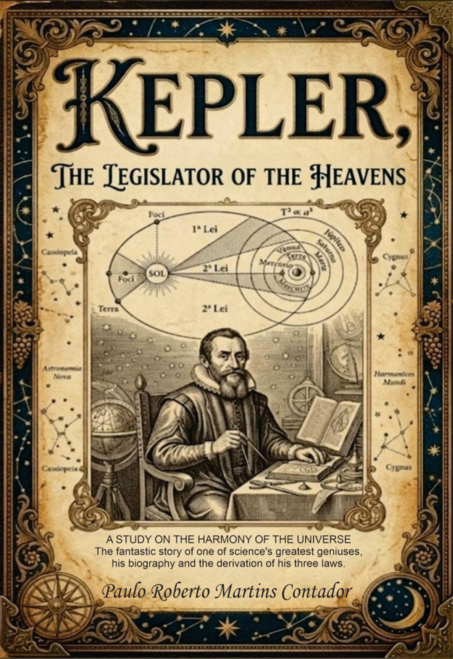
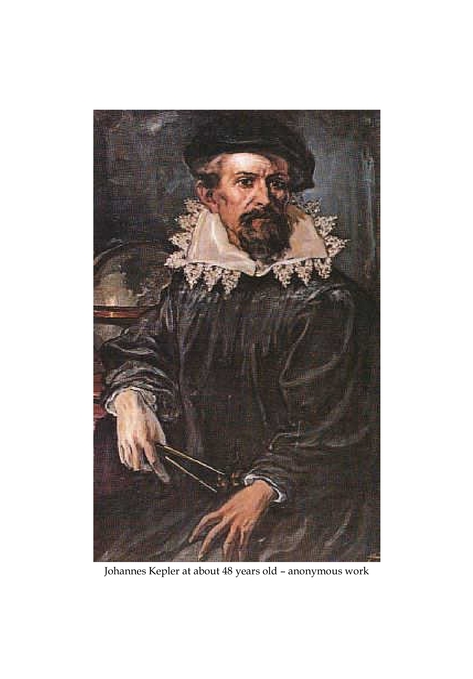
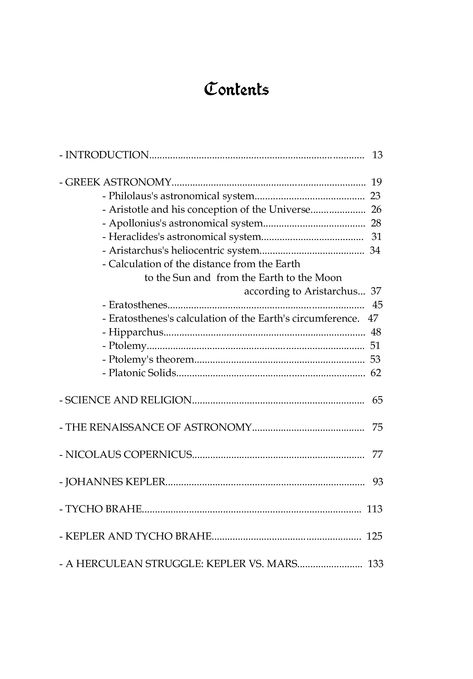
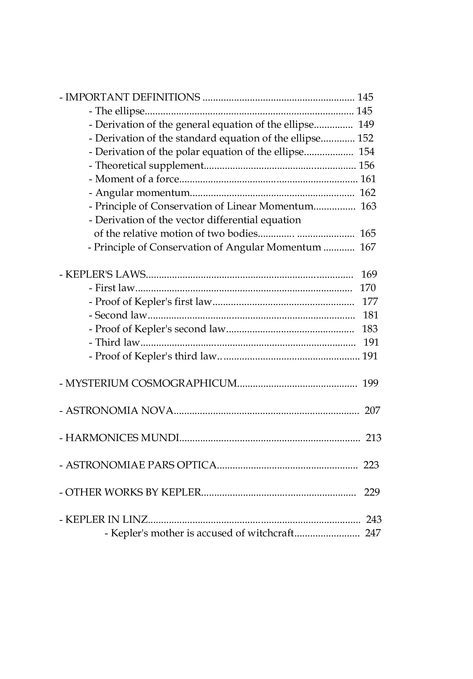
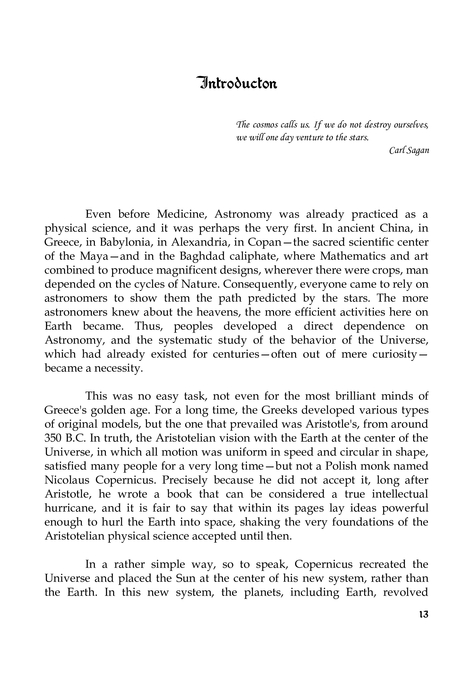
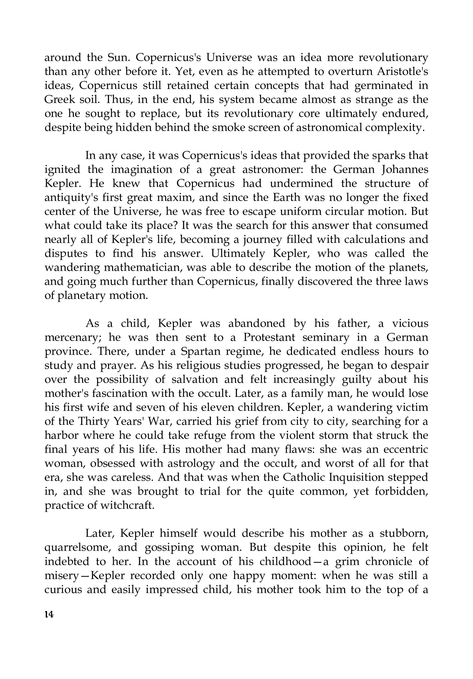
Get to know better the life and work of Johannes Kepler, a German genius almost relegated to oblivion in his own time. Amidst poverty, illness, religious wars, the Catholic Inquisition, the imprisonment of his mother for witchcraft, and the loss of several children, Kepler, in his own way, managed—after a life of trials and errors—to reach his goal. In an inglorious struggle to survive, Kepler revolutionized astronomy with his three laws. In reality, he discovered many laws, but three of them would prove to be precious jewels, and unfortunately, it is practically for these laws alone that his name is remembered today.
A legitimate scientist, a mystical rationalist who through reason reached the transcendent and found God in His own work—a geometer and mathematical God, as he believed. Despite the chaos and great discord of his era, the perfect harmony of his mind allowed him to write his great masterpiece, The Harmony of the World. Kepler legitimized the science of the Renaissance, of discovery, of the new, and of reason.
Unlike the Aristotelian and Ptolemaic solar systems, Copernicus’s solar system no longer placed the Earth at the center of the Universe. The Earth was no longer fixed or motionless; in fact, everything ceased to be fixed and motionless. Copernicus did not only set the Earth in motion, causing the academic world to start spinning in Platonic circles, but he liberated the scientific imagination, allowing it to challenge ancient premises.
| Número de páginas | 325 |
| Edição | 1 (2026) |
| Formato | 16x23 (160x230) |
| Acabamento | Brochura s/ orelha |
| Coloração | Preto e branco |
| Tipo de papel | Offset 90g |
| Idioma | Português |
Tem algo a reclamar sobre este livro? Envie um email para atendimento@clubedeautores.com.br









Faça o login deixe o seu comentário sobre o livro.